
Most people first heard the words nanorobot, nanotechnology and nanomedicine sometime in the last few years. It appeared in headlines about research, cancer, drug delivery, and the future of surgery. It sounded new. It sounded like something just invented.
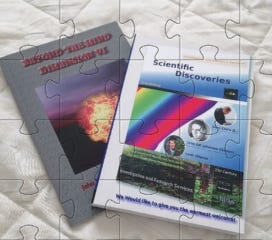
It was not new. It was documented over a decade ago — clearly, precisely, and for general readers — in a publication called Scientific Discoveries, written by researchers Dina Chris JL and John DG Johnson with photojournalist Loria Hilahm.
This is the story of what they wrote about nanotechnology and nanomedicine — and why it matters more now than ever.

What Is Nanotechnology and Nanomedicine and Why Does It Matter for Medicine?
Nanotechnology is the science of working at an almost unimaginably small scale — the nanoscale, where individual molecules and atoms can be manipulated with precision. When applied to medicine, this becomes nanomedicine: the use of nanoscale materials, particles and devices to diagnose, treat and prevent disease inside the human body.
The potential is extraordinary. As the authors write in Scientific Discoveries:
“X-rays and ultrasonic technology once revolutionized medicine; in the future nanomedicine will do the same for millions. We will see medicine in a way we never imagined.”
Nanotechnology and biomedicine together, they argued, would miniaturize instrumentation across every field of medicine — from ophthalmology to neuroscience — and allow health professionals to learn entirely new techniques for diagnosis and treatment of disease.
This was written when most people had never heard of nanomedicine at all.
Nanorobots in nanotechnology and nanomedicine: How They Work and What They Can Do
The chapter at the heart of this article — Nanotechnology: The Power of Nanomedicine — explains nanorobots with a clarity that is rare even in today’s science communication.
What is a nanorobot in nanotechnology and nanomedicine?
A nanorobot, as described by Dina Chris JL and John DG Johnson, is a specifically programmed molecule — a synthetic biomolecule designed with a precise biological objective. Its content and programming depend entirely on what it needs to achieve.
An example on how do nanorobots work
The authors use an accessible, well-chosen example: a patient with a developing tumour at its early stages. The nanorobot would be biologically programmed to travel through the body to the affected area, identify the tumour cells, and then eliminate them. A second nanorobot would then be activated to stabilize the body’s functions after the elimination of the malignant tissue.
Drug delivery to precise cellular targets. No unnecessary damage to healthy tissue. Minimal side effects. Personalised to the individual patient’s biological profile.
This is not a vision from a 2024 conference. This was written in 2010–2013.
The Full Scope of Nanomedicine
The chapter on nanotechnology and nanomedicine sits within a much broader publication. Scientific Discoveries covers the full landscape of emerging biomedical science, including:
→ Nanocarriers and nanoparticles for drug delivery across the blood-brain barrier
→ Stem cell therapy combined with nanotechnology for brain and spinal cord repair
→ Nanogenerators supporting nanorobots to repair DNA and restructure damaged neurons
→ Nanomedicine and bone repair — using nanoparticles to restore skeletal tissue
→ Personalised therapies based on individual genetic and biological profiles
→ Synthetic blood developed using nanotechnology
→ The future of nanomedicine in regenerative medicine and lifespan extension
Each of these topics was documented at a time when they were almost entirely absent from public conversation. The authors were not speculating — they were reporting on real research happening in real laboratories, and translating it for readers who deserved to understand it.
The Warning Inside the Discovery
What makes Scientific Discoveries genuinely remarkable is not just what it documents — it is that it also asks the questions that most science writing avoids.
The authors are direct about the dual nature of nanotechnology. The same capabilities that make nanomedicine a potential revolution in cancer treatment also make it a potential tool for harm.
Nanomolecules that can identify specific genes could also be used to destroy certain proteins, rearrange gene structures, or replicate the complete biological data of a human being to create a biological copy.
Eric Drexler — one of the founding theorists of nanotechnology — is cited from his 1981 PNAS paper:
“Those concerned with the long-range future of humanity must concern themselves with the opportunities and dangers arising from this technology.”
And then the authors add their own voice — in a closing passage that reads not like a scientific paper, but like a moral statement:
“We cannot be naive and pretend that all this development is going to be only for the benefit of humanity. On the contrary, there are some important flaws that can endanger the use of nanotechnologies. In any case let’s hope that in the future those who use nanotechnology do not use it to destroy what God and nature created with so much love and harmony, the life of all species.”
That sentence, written over a decade ago, reads differently today.
Why the Public Awareness Gap Is Not a Small Problem
The 2022 second edition of Scientific Discoveries includes a note that states plainly: these scientific discoveries have not yet been properly understood by the general public — and their understanding is key.
This is not a casual point about science communication. It is an argument about power.
Those who understand what nanotechnology and nanomedicine can do — what is already being developed, tested and deployed — hold a significant advantage over those who do not. Medical decisions, policy decisions, personal decisions about health and technology all become better-informed when the underlying science is understood.
Dina Chris JL describes her own mission this way: to be a bridge between the academic community and the rest of society — because it is by sharing knowledge and maintaining human ethos that we can contribute to shape evolution.
That is what Scientific Discoveries is. A bridge.
About Scientific Discoveries and Its Authors
Dina Chris JL
An investigative journalist and researcher with professional backgrounds spanning biomedicine, biophysics, sociology, international relations, artificial intelligence and robotics. Her work across online, print and television journalism has been dedicated to making advanced scientific knowledge accessible to all audiences.
John DG Johnson
Co-author of the research and writing across all editions of Scientific Discoveries, bringing scientific rigour and breadth to topics at the absolute frontier of biomedical science.
Loria Hilahm
Photojournalist contributing the visual dimension of scientific progress throughout the publication.
Read Scientific Discoveries
Scientific Discoveries, 2nd Edition is available now at worldy-tcp.com/shop/scientific-discoveries. For republishing enquiries or consultation, contact: worldy.tcp@gmail.com
If this article raised questions you want to explore further — about nanotechnology, nanomedicine, stem cells, the Human Brain Project, ageing, cryonics or any of the other topics in the book — each chapter has its own dedicated article in this series. Subscribe to stay informed.
You can find us in Substack @Worldy TCP, Orli and the team
#Nanotechnology #Nanomedicine #Nanorobots #ScientificDiscoveries, #Biomedicine #FutureofMedicine #StemCellTherapy #PersonalisedMedicine #ScienceBooks